


Compacted soil occurs when particles are tightly packed, reducing porosity and limiting air, water, and nutrient movement to the roots. This can happen because of heavy machinery or foot traffic, working with wet soil, clay soil composition, and a lack of organic matter. Compacted soil is bad for your lawn because it restricts essential resources, weakens grass, and leads to poor drainage, resulting in a soggy, disease-prone lawn with shallow roots. To address compaction, schedule an aeration service. Aeration involves perforating the soil to improve drainage and root growth. It’s best done during the growing season for optimal recovery and healthier, more resilient lawns in Iowa.
What is soil compaction, and what causes it?
Compacted soil occurs when soil particles are tightly packed together, reducing space and making the soil less porous. This limits the movement of air, water, and nutrients to the roots of your grass, resulting in a dense, hard surface that can negatively impact your lawn's health. Several factors contribute to soil compaction:
- Heavy Machinery or Foot Traffic: Frequent walking, playing, or parking vehicles compresses the soil, reducing spaces necessary for air and water penetration.
- Working with Wet Soil: Digging, walking, or tilling when the soil is wet causes particles to stick together, leading to compaction. Avoid heavy activity on your lawn after rainfall.
- Soil Composition: Clay soils are more prone to compaction due to their small particle size and tendency to stick together. Lawns with high clay content are more susceptible to compaction.
- Lack of Organic Matter: Organic matter improves soil structure by creating spaces between particles. Without it, soil becomes denser and more compact.
Why is compacted soil bad for your lawn?
Compacted soil poses several problems for your lawn. First and foremost, it restricts the movement of air, water, and nutrients. The roots of your lawn need oxygen to breathe, water to grow, and nutrients to thrive. When the soil is compacted, these essential elements can't reach the roots effectively, leading to weak, unhealthy grass.
Additionally, compacted soil can lead to poor drainage. Water may pool on the surface instead of penetrating the ground, creating a soggy lawn that is susceptible to disease and pests. This can also lead to increased runoff, which erodes the soil and washes away nutrients. Compacted soil also makes it difficult for the roots to grow deep and strong. Shallow roots are less resilient and more vulnerable to environmental stresses like drought and heat. As a result, your lawn may become thin, patchy, and more prone to weeds.
How to Address Soil Compaction
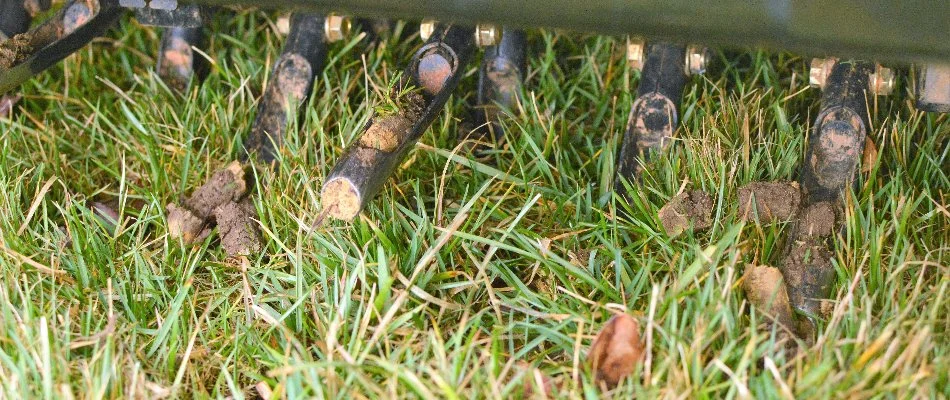
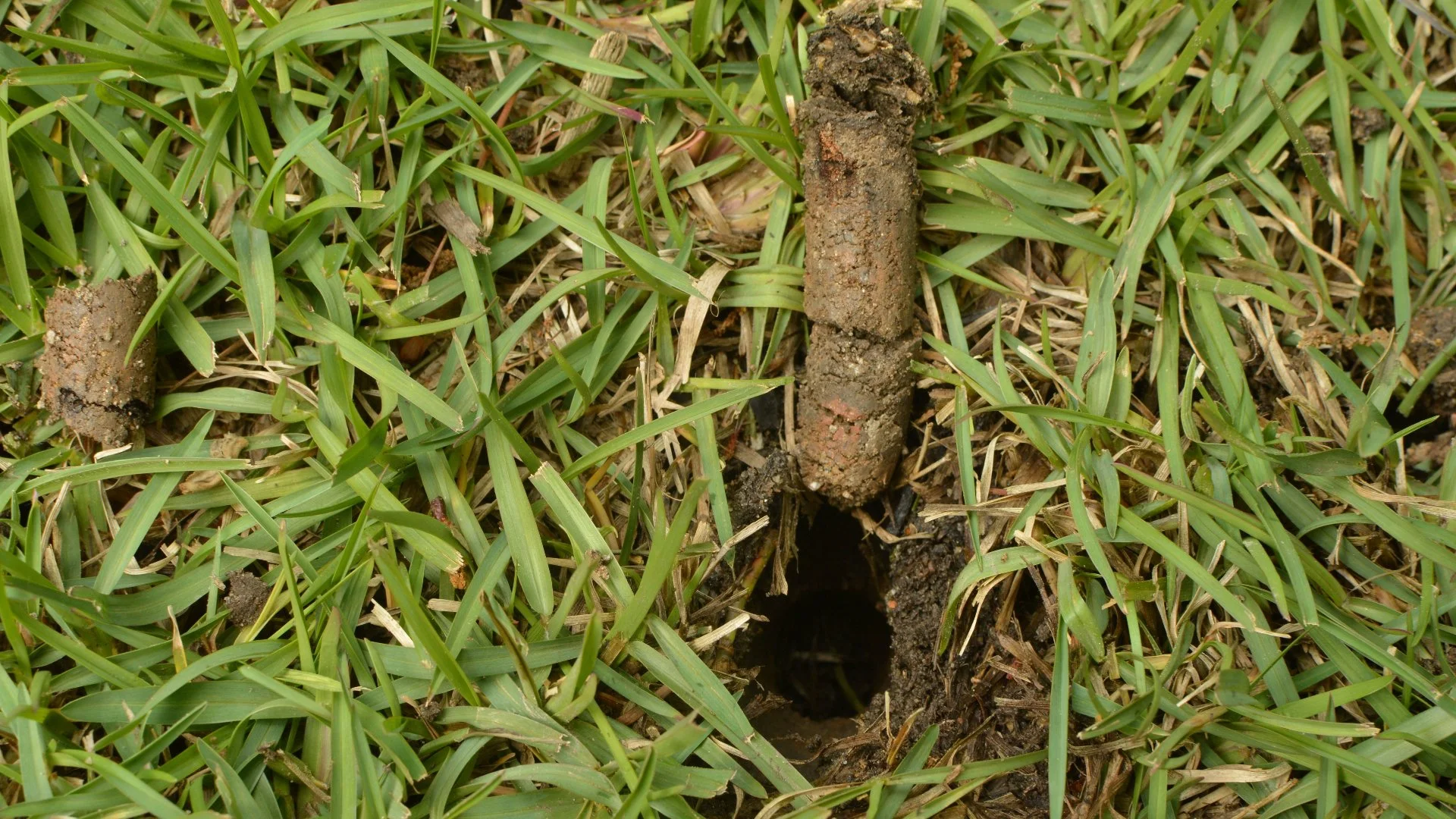
If you suspect your lawn has compacted soil, scheduling an aeration service is an effective solution. Aeration involves perforating the soil with small holes, creating channels where nutrients, water, air, and sunlight can pass through to reach the roots. This process helps to alleviate compaction, improve drainage, and promote healthier root growth.
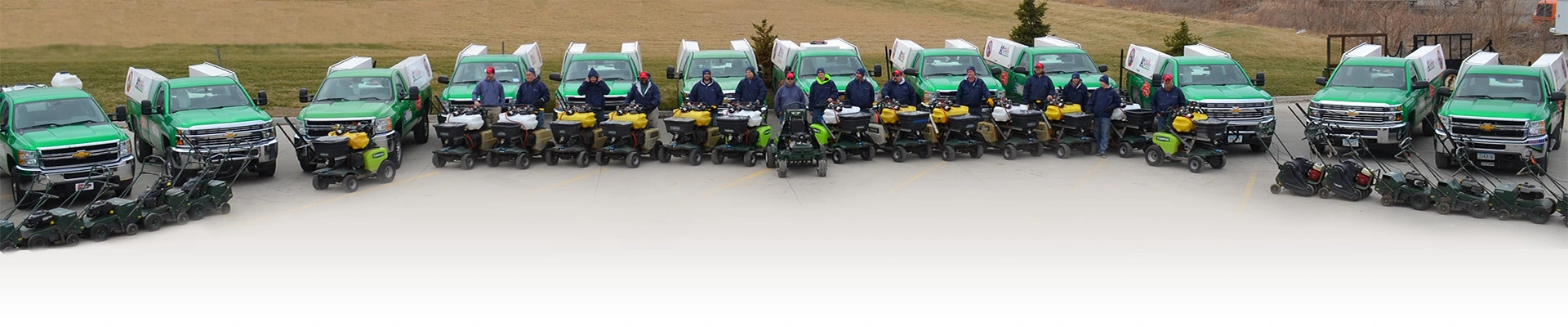
Aeration is typically done with a machine called an aerator, which removes small plugs of soil from the lawn. This not only reduces compaction but also encourages the decomposition of thatch, a layer of dead grass and roots that can build up on the soil surface. For optimal results, it's best to aerate your lawn during the growing season when the grass can recover quickly.
Call us today to sign up for our core aeration service!
If you're dealing with compacted soil, don't wait to address the issue. Our team at A+ Lawn & Landscape offers a core aeration service that you can schedule in the spring or fall to address soil compaction and ensure the roots can access the nutrients your grass needs for healthy growth. We use an aerator machine to remove the plugs of soil from your lawn, ensuring your entire turf is evenly aerated for optimal results. Our aeration service is offered to property owners in Des Moines, West Des Moines, Ankeny, IA, and nearby areas. Call us today at (515) 289-2020 to sign up for this service!

Comments (0)
Thanks for your comment!
Thanks for your feedback! Your comments have been successfully submitted! Please note, all comments require admin approval prior to display.
Error submitting comment!
There is a problem with your comment, please see below and try again.