



Lawn diseases are a common challenge for property owners in Iowa, often caused by fungi and influenced by environmental conditions. Brown patch thrives in warm, humid weather, affecting all grass types with circular brown patches. Ascochyta leaf blight targets grasses like Kentucky bluegrass, appearing in late spring with straw-colored patches due to rapid moisture changes. Leaf spot is most active in cool, wet periods, causing dark lesions on grass blades that can lead to thinning. Snow mold is evident after snow melts, forming matted, discolored patches due to prolonged snow cover and excessive thatch.
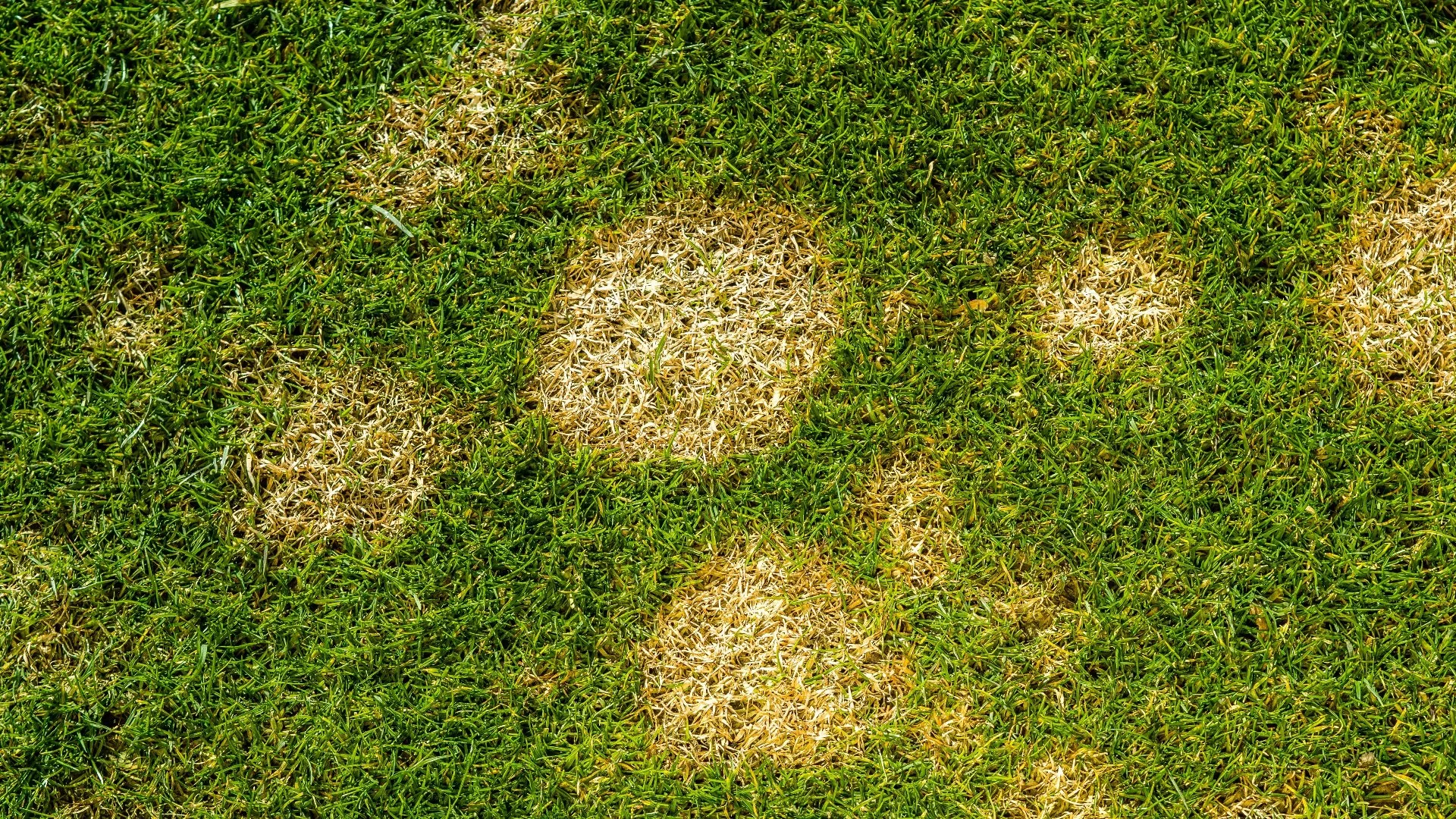
Brown patch causes patches of dead grass in varying sizes.
Brown patch is a common lawn disease that manifests as circular patches of brown, dead grass. These patches can vary in size from a few inches to several feet in diameter. The disease affects all types of grasses and is particularly noticeable during the summer months. The edges of the affected areas may appear water-soaked or dark, giving them a distinctive ring-like appearance. As the disease progresses, the patches may coalesce, causing large areas of the lawn to become unsightly.
This disease thrives in warm, humid weather when there is prolonged wetness on the leaves, often due to dew, rain, or irrigation. High nitrogen levels, especially from fall fertilization, can make the grass more vulnerable by promoting lush, susceptible growth. Over-irrigation and poor soil drainage contribute to the prolonged leaf wetness, creating ideal conditions for the fungus. Additionally, excessive thatch build-up can retain moisture, further encouraging fungal growth and making the lawn more susceptible to brown patch.
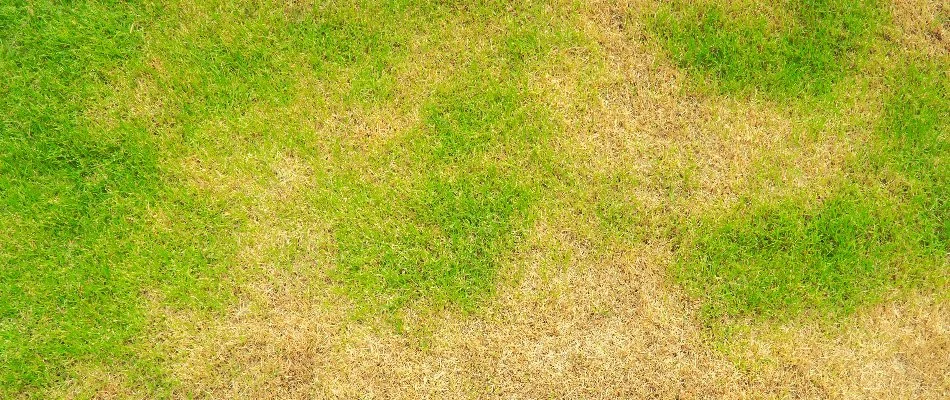
Ascochyta Leaf Blight Causes Irregular Straw-Colored Patches of Grass
Ascochyta leaf blight primarily targets Kentucky bluegrass, tall fescue, and perennial ryegrass, appearing in late spring or early summer. It is characterized by irregular patches of straw-colored, blighted grass. The tips of the grass blades may appear pinched or shriveled, and the disease can spread rapidly under favorable conditions. While it may look severe, ascochyta leaf blight rarely kills the grass completely, but it does cause significant aesthetic damage.
The disease is most active during periods of rapid changes in moisture, such as after drought conditions followed by heavy rain or over-watering. High foot traffic can compact the soil, stressing the grass and making it more susceptible. Improper mowing practices, such as mowing too low, can also stress the grass, providing an entry point for the fungus. These conditions weaken the grass, making it more vulnerable to infection and damage.
Leaf spot can be characterized by small, dark lesions on the grass blades.
Leaf spot is a disease that affects a variety of grass types, including Kentucky bluegrass, perennial ryegrass, and tall fescue. It is identified by small, dark lesions on the grass blades, which can eventually lead to thinning and bare spots as the disease progresses. The lesions may have a purplish or brownish hue, and as they expand, they can cause the grass blades to wilt and die.
This disease is most active during cool, wet periods in spring and fall. Poor air circulation, often found in dense plantings or shaded areas, can retain moisture and create a favorable environment for the fungus. A nutrient imbalance, particularly a deficiency in essential nutrients, can weaken the grass, making it more susceptible to leaf spot. The combination of these conditions can lead to significant damage and unsightly patches on the lawn.
Snow mold causes patches of matted, discolored grass.
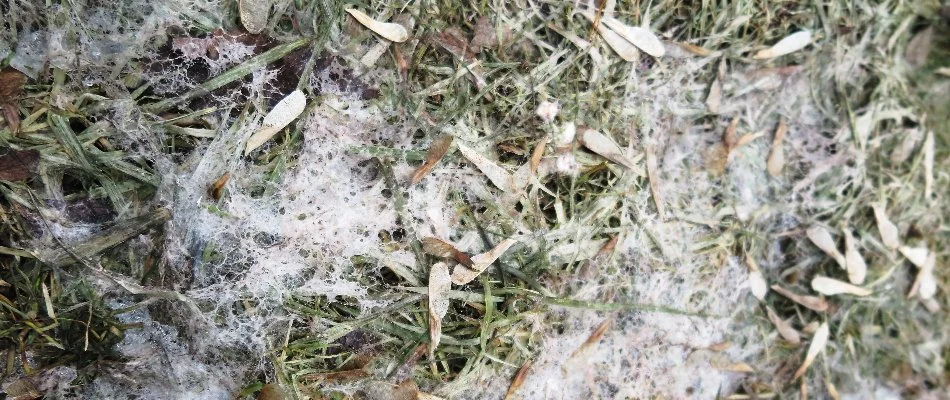
Snow mold is a fungal disease that becomes apparent when the snow melts in early spring, primarily affecting cool-season grasses. It is characterized by circular patches of matted, discolored grass that may appear white, pink, or gray, depending on the specific type of snow mold. These patches can be several inches to a foot in diameter and may merge to form larger areas of damage.
The disease develops under prolonged snow cover, especially when there is an early, heavy snow on unfrozen ground. Excessive thatch or debris can hold moisture, providing an ideal environment for the fungus to thrive. High nitrogen levels applied in late fall can result in lush growth that is more prone to infection. These conditions create a perfect storm for snow mold to cause significant damage to the lawn as it emerges from winter dormancy.
Give us a call today to sign up for our lawn disease control service.
If your lawn is showing signs of disease, you need our lawn disease control treatments at A+ Lawn & Landscape. We provide curative treatments against various diseases, such as brown patch, Ascochyta leaf blight, leaf spot, and snow mold. Our curative treatments will eliminate the disease and stop the issue from spreading and causing further damage. We also provide preventative treatments to ensure fungal issues don't become an issue again for your lawn. Our lawn disease control services are available to commercial and residential properties, as well as HOAs, in Des Moines, West Des Moines, Ankeny, IA, and neighboring areas. Give us a call today at (515) 289-2020 to sign up!

Comments (0)
Thanks for your comment!
Thanks for your feedback! Your comments have been successfully submitted! Please note, all comments require admin approval prior to display.
Error submitting comment!
There is a problem with your comment, please see below and try again.